Antimalarials / plasmoquine PQ/ chloroquine CQ/ plaquenil HCQ
by drdoc on-line
Antimalarial therapy is considered a mild
disease modifying therapy in the management of inflammatory arthritis,
in particular for Rheumatoid arthritis. The drug is available in several
forms.
Chloroquine sulphate - Nivaquine / plasmoquine PQ
Chloroquine phosphate - Chloroquine CQ
Hydroxychloroquine - Plaquenil HCQ
How it works - mechanism of action
Antimalarial agents used in rheumatology act mainly by raising lysosomal pH, inhibiting Toll‑like receptor signaling, and reducing pro‑inflammatory cytokine production, which together dampen autoimmune activation.
Inhibition of Toll‑like receptor (TLR) signaling TLR antagonism is considered one of the most important mechanisms in systemic lupus erythematosus (SLE).
Antimalarials inhibit intracellular nucleic‑acid–sensing TLRs: TLR7 (recognizes ssRNA) TLR8 TLR9 (recognizes CpG DNA)
The decision regarding usage is based on need for treatment of the actual immune process rather than treatment of symptoms of pain. The response is seen only at 6 weeks - 2 months, but response may take as long as 6 months to start. The drug may be used alone or in combination with other disease modifying drugs - in particular methotrexate.
Interestingly combination with methotrexate seems to reduce side effects of the methotrexate.
There are other diseases where antimalarials
have been used with variable results.
The most common indication other than
Rheumatoid arthritis, is for Systemic Lupus Erythematosus, where there
is especially a response in skin and joint involvement.
Antimalarials are considered a vital component of treatment of Systemic
Lupus.
Use in dermatomyositis
Use in Sjogrens syndrome
Use in antiphospholipid syndrome.
Use in Psoriasis is controversial as most
dermatologists have concerns relating to aggravation of the skin
disease. However recent publication suggests that the skin is
statistically not worse in patients taking antimalarials with benefit.
Some early work is in progress in therapy of osteoarthritis, especially
in subtypes with inflammatory component, including erosive
osteoarthritis, and those patients with early, aggressive onset and
progression, as well as those with a bad family history. No good
publications exist regarding efficacy, but anecdotal responses are
reported, and many rheumatologists are utilizing this in such patients
and in trials.
Additional health benefits
Recent studies highlight several ancillary
benefits:
Lipid‑lowering effects in SLE and RA patients.
Improved glucose metabolism and reduced diabetes incidence.
Cardiovascular protection — HCQ plaquenil associated with 72% reduction
in cardiovascular events in long‑term RA use.
No cardiovascular toxicity observed in a large RA cohort using
guideline‑recommended doses
Side effects
The drug is felt to be safe with a range of low grade toxicity
including:
Sun / photo sensitivity with tendency to burn in the sunlight more
easily
Increased pigmentation is possible, including facial, over the arms,
forearms and shins.
Allergic rashes are also possible and may lead to requirement to stop
the drug.
Nausea - aggravated by its bitter taste.
Buzzing ears (tinnitis) and complaints of hearing difficulty - dose
dependant and reversible
Visual impairment due to retinal toxicity is described rarely.
This is dose dependent and is only very rarely seen at currently recommended doses.
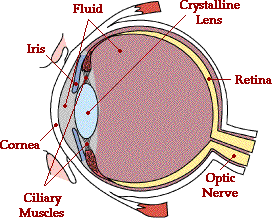
A deposit of chloroquine in the cornea may be noted. This may be a suggestion that a dose adjustment may be required, but does NOT represent retinal toxicity. The onset of fundal (the back of the eyeball), change however, is suggestive of toxicity, with a reduction in the visual fields and changes on the back of the eye may be seen, with a "bulls eye" appearance of the macula of the retina.
The change is only very rarely
irreversible, especially if the dose is high and the problem is missed.
It is for this reason that the eyes should be checked yearly by an
ophthalmologist. Some people feel that this is not required, but it is
my personal practice to support yearly eye checks, with particular focus
on doing peripheral field testing including red light field testing.
Dosage
Recommended maximal doses depend on the type of antimalarial
Chloroquine - 4mg/kg chloroquine base
Hydroxychloroquine - 6mg / kg
Monitoring
I ensure 12 monthly ophthalmologic assessments
Efficacy and safety
Safety profile Most patients tolerate antimalarials well: Low overall
toxicity — HCQ less toxic than CQ
Retinal toxicity is the most important long‑term risk: Risk is <1% for HCQ with <7 years exposure or <1000 g cumulative dose
CQ carries higher risk
Long‑term cohort: retinopathy incidence 3.97 per 1000 patient‑years
Other adverse events: gastrointestinal intolerance, dermatologic reactions, headaches, dizziness
Pregnancy safety — no fetal ocular toxicity or malformations reported across multiple studies
Cochrane Database Syst Rev 2000;(4)
Antimalarials for treating rheumatoid arthritis. Suarez-Almazor ME,
Belseck E, Shea B, Homik J, Wells G, Tugwell P. Health Services
Research, Veterans Affairs Medical Center, Mailbox Station 152, 2002
Holcombe Blvd, Houston, Texas 77024, USA.
OBJECTIVES: To assess the short-term efficacy and toxicity of
antimalarials for the treatment of rheumatoid arthritis (RA).
SEARCH STRATEGY: We searched the Cochrane Musculoskeletal Group's trials
register, the Cochrane Controlled Trials Register, Medline and Embase up
to and including August 2000. We also carried out a handsearch of the
reference lists of the trials retrieved from the electronic search.
SELECTION CRITERIA: All randomized controlled trials (RCTs) and
controlled clinical trials (CCTs) comparing antimalarials against
placebo in patients with RA DATA COLLECTION AND ANALYSIS: Data
abstraction was carried out independently by two reviewers. The same two
reviewers using a validated checklist (Jadad 1996) assessed the
methodological quality of the RCTs and CCTs. Rheumatoid arthritis
outcome measures were extracted from the publications for the 6-month
endpoint. The pooled analysis was performed using standardized mean
differences for joint counts, pain and global assessments. Weighted mean
differences were used for erythrocyte sedimentation rate (ESR). Toxicity
was evaluated with pooled odds ratios for withdrawals. A chi-square test
was used to assess heterogeneity among trials. Fixed effects models were
used throughout.
MAIN RESULTS: We found four trials, with 300 patients randomized to
hydrochloroquine and 292 to placebo. Only trials evaluating
hydroxychloroquine could be pooled in the analysis. A statistically
significant benefit was observed when hydroxychloroquine was compared to
placebo. The standardized mean differences for the various outcome
measures ranged from -0.33 to -0.52, and were statistically significant.
Statistically significant differences were also observed for ESR.
Overall withdrawals and withdrawals due to lack of efficacy were
significantly more frequent in the placebo group. No differences were
observed in withdrawals due to toxicity.
REVIEWER'S CONCLUSIONS: Hydroxychloroquine appears to be efficacious for the treatment of RA. Its overall effect appears to be moderate, but its low toxicity profile should be considered when treating patients with RA.
J Rheumatol 2000 Mar;27(3):623-9
Consequences of delayed therapy with second-line agents in rheumatoid
arthritis: a 3 year followup on the hydroxychloroquine in early
rheumatoid arthritis (HERA) study.
Tsakonas E, Fitzgerald AA, Fitzcharles MA, Cividino A, Thorne JC,
M'Seffar A, Joseph L, Bombardier C, Esdaile JM.
Department of Medicine, McGill University, Montreal, Quebec, Canada.
OBJECTIVE: To assess the longterm effect of delaying therapy with
second-line agents in patients with early rheumatoid arthritis (RA).
METHODS: One hundred nineteen patients who participated in a 9 month
placebo controlled randomized trial of hydroxychloroquine sulfate (HCQ)
were followed prospectively for an additional 3 years. Those randomized
to HCQ are referred to as the early treatment group and those randomized
to placebo as the delayed treatment group. Participants were assessed
annually for pain [Arthritis Impact Measurement Scales (AIMS) and
Stanford Health Assessment Questionnaire (HAQ)], physical disability
(AIMS and HAQ), and the RA global well being scale (AIMS). Conversion of
results into standard deviation (SD) units permitted defining a
substantial difference as per Felson as > 0.30 SD units and a clinically
indistinguishable difference as < or = 0.06 SD units.
RESULTS: One hundred fifteen patients (97%) participated and complete
data were available on 104 (87%). Compared to the early treatment group,
the delayed group remained worse for both the pain and the physical
disability outcomes over the additional 3 year followup. The difference
in the RA global well being score became clinically indistinguishable
for the early and delayed groups only after the 2 year post-trial
assessment. The between-group differences were not explained by
post-trial therapy with corticosteroids, other second-line agents, or
nonsteroidal antiinflammatory drugs and analgesic preparations.
CONCLUSION: These findings show that a delay in instituting therapy with
second-line agents, even a 9 month delay in instituting a moderately
powerful second-line agent such as HCQ, has significant effects on
longterm patient outcome, and provides strong evidence in support of
early therapy in RA.
Chang Gung Med J 2001 May;24(5):329-34
Progression of hydroxychloroquine retinopathy after discontinuation of
therapy: case report.
Wei LC, Chen SN, Ho CL, Kuo YH, Ho JD. Department of Ophthalmology,
Chang Gung Memorial Hospital, Taipei, Taiwan, R.O.C.
Chloroquine and its derivative, hydroxychloroquine sulfate, have been
used in treating malaria, dermatitides of systemic lupus erythematosus
and rheumatoid arthritis. Hydroxychloroquine retinopathy is uncommon in
Taiwan. Here we report a patient with hydroxychloroquine retinopathy
which progressed even after discontinuation of hydroxychloroquine. A
42-year-old woman had systemic lupus erythematosus for twenty years. She
had been treated with 200 to 400 mg of hydroxychloroquine per day (4 to
8 mg/kg of body weight/day) with a cumulative dose of 657 g. After
bull's-eye maculopathy was found, hydroxychloroquine was discontinued.
Her medical history revealed no chloroquine administration and no other
systemic disease. Five years after cessation of the therapy, her visual
acuity and visual fields continued to deteriorate. Ophthalmoscopic
examination revealed the hydroxychloroquine retinopathy had advanced. To
the best of our knowledge, the progression of hydroxychloroquine
retinopathy after discontinuation of medications is a rare phenomenon.
Regular ophthalmologic examinations should be performed for patients on
hydroxychloroquine regimens because there is no satisfactory treatment
for hydroxychloroquine retinal toxicity. Ophthalmologists,
dermatologists and rheumatologists should monitor for ocular toxicity of
hydroxychloroquine carefully.
Hydroxychloroquine ototoxicity in a patient
with rheumatoid arthritis.
Rheumatol Int 2000;19(5):203-4
Seckin U, Ozoran K, Ikinciogullari A, Borman P, Bostan EE.
Department of Physical Medicine and Rehabilitation, Ankara Numune
Education and Research Hospital, Turkey. pinarb@ato.org.tr
We report a case of reversible sensorineural hearing loss due to
hydroxychloroquine (HQ) treatment. The patient was a 34-year-old woman
with 1 year of rheumatoid arthritis (RA). She developed reversible
hearing loss after 5 months of HQ treatment. Sensorineural deafness has
previously been reported with chloroquine treatment, but this is the
first report of ototoxicity associated with HQ in RA.
Retinal toxicity in long term hydroxychloroquine treatment.
Annals of the Rheumatic Diseases. 55(3):187-9, 1996 Mar.
Abstract
OBJECTIVE: To report clinical experience from patients with rheumatoid
arthritis (RA) and systemic lupus erythematosus (SLE) who were receiving
recommended doses of hydroxychloroquine for more than six years, and
were monitored for evidence of hydroxychloroquine related retinopathy
every six months. METHODS: A prospective (and continuing) evaluation was
made of the potential retinal toxicity of hydroxychloroquine in a cohort
of 360 Greek patients followed for RA and SLE, 58 of whom have received
long term treatment ( > six years). Fundoscopy, colour vision tests,
dark adaptation tests, visual field testing, automated perimetry, and
electroretinogram were performed every six months.
RESULTS: Among 58 patients receiving hydroxychloroquine for more than
six years, two relatively young women (3.5%), one treated for RA and the
other treated for SLE, developed characteristic hydroxychloroquine
related toxic retinal lesions after cumulative doses of 700 g (6.5
years) and 730 g (8 years) of hydroxychloroquine, respectively.
Bilateral visual acuity was 6/6 and 6/7.5, respectively; both patients
had normal colour perception. Despite an early diagnosis and cessation
of treatment, permanent visual field paracentral scotomata in both
patients, and persisting lesions in fluorescein angiography in the
patient with SLE, were observed at 4.5 and 3 years of follow up,
respectively. No other specific cases of hydroxychloroquine related
retinopathy have to date been identified in the remaining 302 patients.
CONCLUSION: Cases of irreversible, hydroxychloroquine related
retinopathy in patients who did not receive overdoses have not been
reported previously. The present observations in two relatively young
patients should raise our concern regarding the long term usage of an
increasingly popular medication in rheumatology practice
Hydroxychloroquine retinopathy: is screening
necessary?
Blyth C, Lane C.
EDITORIAL
BMJ 1998;316:717-8. (7 March.)
Intensive screening is not necessary at normal doses
The 4-aminoquinolines (chloroquine and hydroxychloroquine) are used as
second line agents for their disease modifying effect in rheumatoid
arthritis and systemic lupus erythematosus. The association between
chloroquine therapy and pigmentary maculopathy has been known since
1959.1 The manufacturer's datasheet suggests that all patients receiving
hydroxychloroquine should undergo an ophthalmic examination, including a
central visual field test, at least twice a year. If implemented this
recommendation would have a noticeable impact on the ophthalmic service.
Is it necessary?The earliest sign of chloroquine retinopathy is a
paracentral scotoma. This so called premaculopathy can be detected with
an Amsler chart.2 Later, subtle pigmentary mottling develops at the
macula, and this may progress to the characteristic bull's eye
maculopathy and widespread retinal pigment epithelial atrophy. In its
early stages chloroquine retinopathy is reversible by stopping the
drug.3 Hydroxychloroquine given at currently prescribed doses is thought
to be less toxic than chloroquine.
The recommended dose for hydroxychloroquine is 6.5 mg/kg lean body
weight per day.4 In their prospective study of 73 patients treated with
hydroxychloroquine for at least 18 months, Morsman et al reported one
case of possible toxic retinopathy and this patient had received twice
the recommended daily dose.5 In a retrospective study of 82 patients
taking hydroxychloroquine for over a year (mean 38.6 months) Spalton et
al found no cases of retinopathy.6 No correlation was present between
the computerised visual field indices and any measure of increasing drug
exposure. The authors concluded that visual field testing was
unnecessary in these patients.6 Bernstein analysed all published cases
and Food and Drug Administration reports of hydroxychloroquine
retinopathy. He found no evidence of permanent visual loss among more
than 1500 patients who did not exceed the recommended daily dosage for
up to 10 years.7 More recently, however, two well documented cases of
hydroxychloroquine retinopathy have been reported in patients treated
for 6.5 and 8 years without exceeding the recommended maximum daily
dose.8The Royal College of Ophthalmologists' guidelines for managing
patients receiving hydroxychloroquine recommend a baseline ophthalmic
examination at the start of treatment, including best corrected visual
acuity, fundoscopy, and a central visual field test.9 Thereafter the
prescribing medical practitioner should be responsible for any screening
considered necessary. Patients should be warned to report any visual
disturbance and may be given an Amsler chart to use on a monthly basis.
No further ophthalmic examination is necessary unless the patient
becomes symptomatic.
Current evidence suggests that hydroxychloroquine retinopathy is
extremely rare if the recommended dose is not exceeded. In most cases a
baseline ophthalmic assessment and issue of an Amsler chart with
instructions on its use will suffice. The small number of patients who
have received hydroxychloroquine for longer than six years should be
kept under ophthalmic review until more information is available about
the safety of long term treatment.
Chris Blyth, Senior registrar in ophthalmology.
Carol Lane, Consultant ophthalmologist.Cardiff Eye Unit, University
Hospital of Wales Healthcare NHS Trust, Cardiff CF4 4XW
1. Hobbs HE, Sorsby A, Freedman A. Retinopathy following chloroquine
therapy. Lancet 1959; ii: 478-480.
2. Easterbrook M. The sensitivity of Amsler grid testing in early
chloroquine retinopathy. Trans Ophthalmol Soc UK 1985; 104: 204-207.
3. Crews SJ. Chloroquine retinopathy with recovery in early stages.
Lancet 1964; ii: 436-438.
4. Mackenzie AH. Dose refinements in long-term therapy of rheumatoid
arthritis with antimalarials. Am J Med 1983; 75(suppl): 40-45.
5. Morsman CDG, Livesey SJ, Richards IM, Jessop JD, Mills PV. Screening
for hydroxychloroquine retinal toxicity: is it necessary? Eye 1990; 4:
572-576
6. Spalton DJ, Roe GMV, Hughes GRV. Hydroxychloroquine, dosage
parameters and retinopathy. Lupus 1993; 2: 355-358
7. Bernstein HN. Ocular safety of hydroxychloroquine. Ann Ophthalmol
1991; 23: 292-296[
8. Mavrikakis M, Papazoglou S, Sfikakis PP, Vaiopoulos G, Rougas K.
Retinal toxicity in long term hydroxychloroquine treatment. Ann Rheum
Dis 1996; 55: 187-189
9. Royal College of Ophthalmologists. Chloroquine, hydroxychloroquine
and the eye. London: RCO , 1993
Combination therapy
J Rheumatol 1997 Oct;24(10):1896-902
Safety and efficacy of hydroxychloroquine as maintenance therapy for
rheumatoid arthritis after combination therapy with methotrexate and
hydroxychloroquine.
Clegg DO, Dietz F, Duffy J, Willkens RF, Hurd E, Germain BF, Wall B,
Wallace DJ, Bell CL, Sleckman J. Department of Medicine, University of
Utah School of Medicine, Salt Lake City, Utah, USA.
OBJECTIVE: To evaluate the ability of hydroxychloroquine sulfate (HCQ)
to extend the response to combination therapy with HCQ and methotrexate
(MTX) and the safety of longterm HCQ maintenance therapy in patients
with active rheumatoid arthritis (RA).
METHODS: Two-part study consisting of an open label segment evaluating
combination HCQ/MTX therapy followed by a double blind segment
evaluating maintenance therapy for a total of 60 weeks. First, all
patients were treated with HCQ 400 mg/day and MTX 7.5 to 15 mg/week for
24 weeks. Then, responders were randomized into 3 groups: (1) HCQ with
MTX as needed for disease flare (n = 40), (2) HCQ 400 mg/day (n = 41),
or (3) placebo with MTX as needed for disease flare (n = 40), each for
36 weeks.
RESULTS: Clinical disease and laboratory variables improved
significantly during initial combination therapy with HCQ and MTX. After
MTX withdrawal, HCQ-containing maintenance regimens delayed the onset of
disease flare (p = 0.023). There were no unexpected adverse events at
any time or between-group differences in the distribution of adverse
events during the double blind segment.
CONCLUSION: Combination of HCQ and MTX appeared to be effective and well
tolerated for 24 weeks. After withdrawal of MTX, HCQ extended the
response seen with combination therapy and was well tolerated for 36
weeks. Initial therapy with HCQ and MTX, followed by maintenance HCQ,
may be a useful alternative for the treatment of RA.